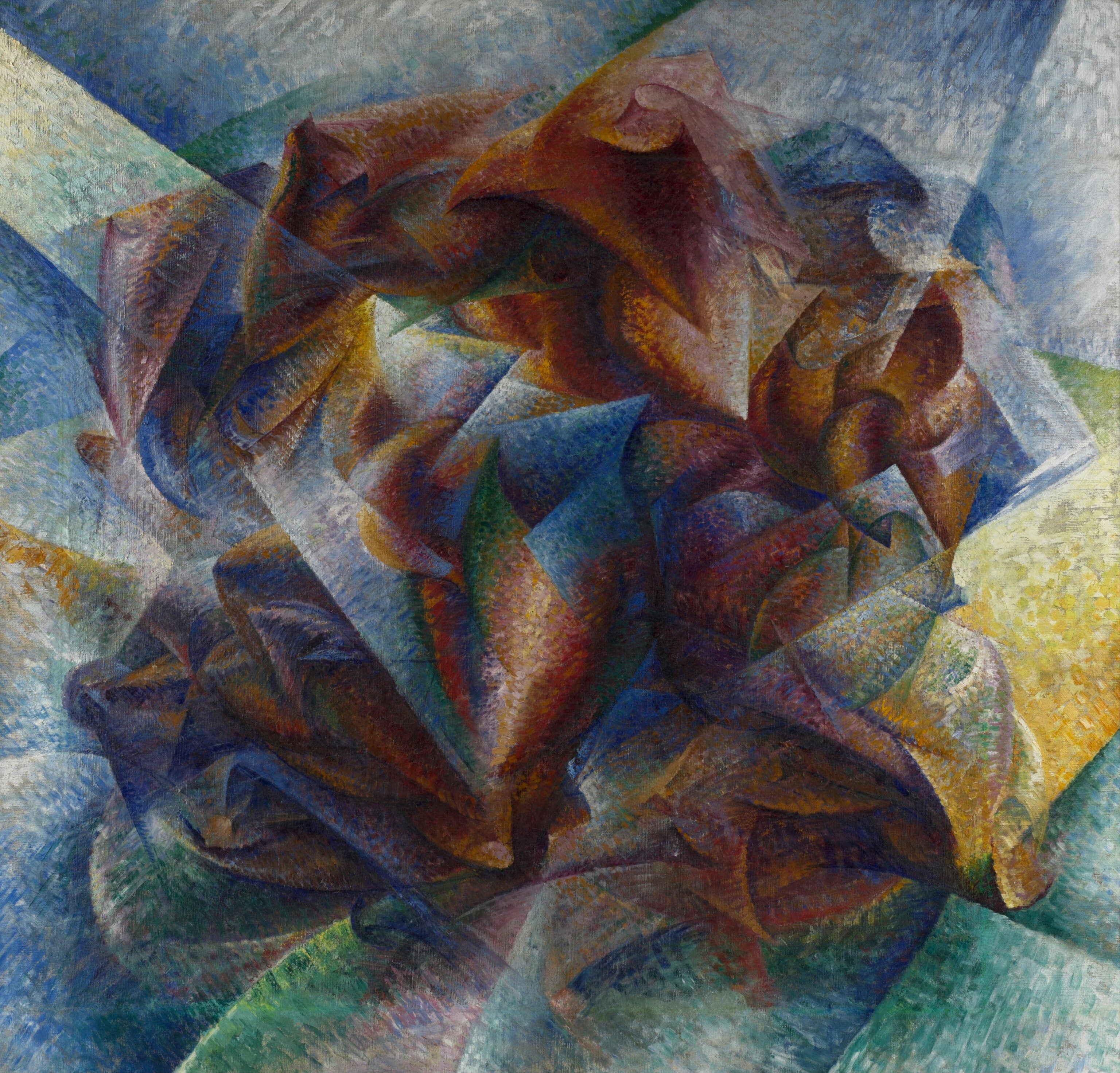
We are used to hearing about artists that have nothing but criticism for the direction society is developing. But for the Futurists, the development could not move fast enough. In 1909, the poet Filippo Tommaso Marinetti published 'The Manifesto of Futurism', worshipping speed, technology, and youthful energy, while rejecting past greatness and intellectualism. The ideas were without a doubt provocative, with glorification of violence and destruction, and direct attacks on feminism, sentimentality, and emotionality. And taking into account that Marinetti would later co-author 'The Fascist Manifesto', there were some extreme ideas at the foundation of the Futurist movement. At first many of the artists that identified with the movement were also ideologically convinced, but would later moderate and keep their focus on the art it produced. Artists such as Umberto Boccioni, Giacomo Balla, and Carlo Carrà painted modern cities and technologies with a focus on movement and intense energy.